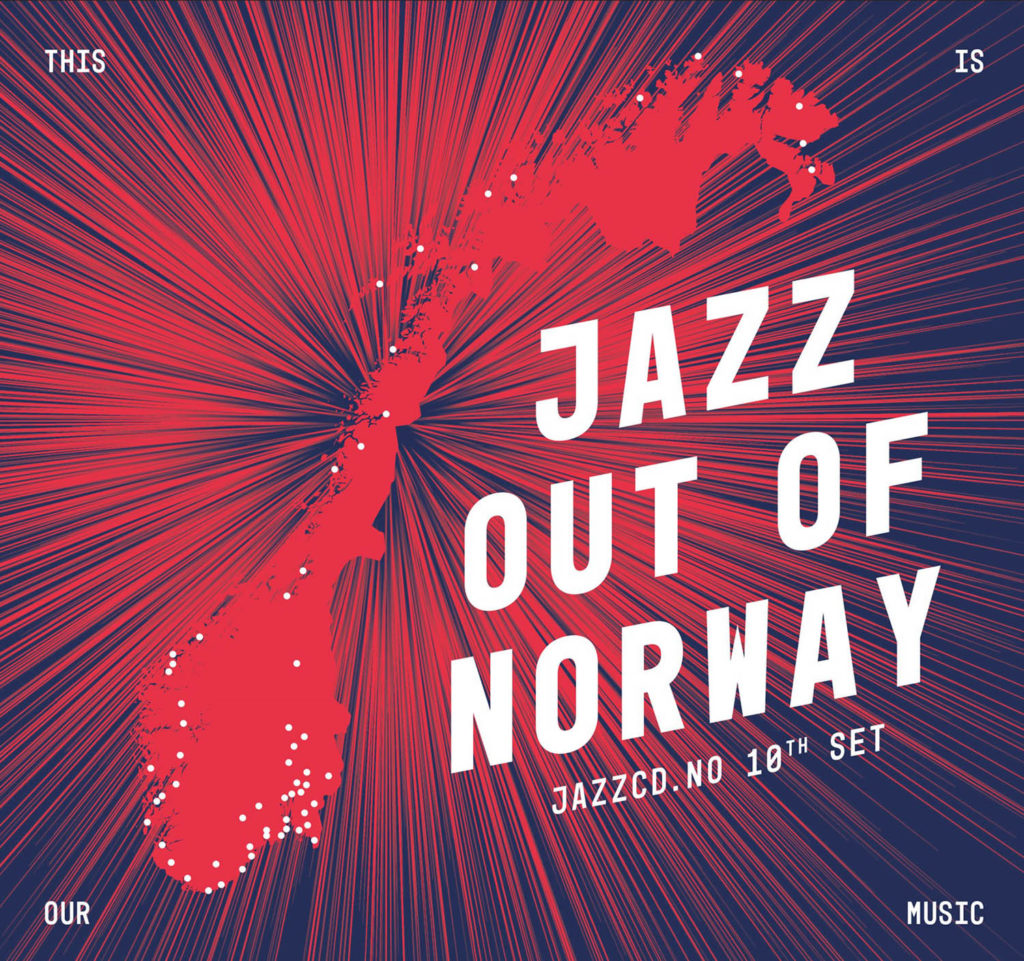
In December 2005, the Guardian , a UK broadsheet, argued that Oslo, and not New Orleans, Chicago or New York, was now the jazz capi- tal of the world. At the time it caused a few raised eyebrows. But not any more. Today Norway is widely recognised as the home of some of the most exciting, creative and forward looking jazz to be found in anywhere on the contemporary scene.
Of course, many countries boast about their own local jazz scenes, but in Norway there is a real sense of what jazz can become, not what it was. There is a feeling that jazz is a music of limitless poten- tial where the only constraints are the limitations of human imagina- tion. It is a country where the genie has well and truly escaped from the bottle marked ‘tradition.’ But why should this be?
Perhaps one reason is that in Europe in general, and Norway in par- ticular, the language of jazz is neither mother tongue nor sacred text. Musicians are not constrained by notions of a ‘jazz tradition’ so that elements as diverse as classical, pop, folk, rock, free and electron- ics are used to enrich the basic jazz ingredient. The result is music that assumes as many different characteristics as there are creative musicians to play it.
And this is what is represented on this set of three albums. A diver- sity of musical approaches so broad that each one provides a differ- ent definition of what ‘Norwegian Jazz’ can be. Yes, there are quali- ties we associate with Norwegian jazz, but not all these performanc- es share them, instead they collectively reveal how the spirit of jazz has been successfully harnessed as a means of human expression that at times can be moving, heart warming, profound, exciting, fan- ciful or sad. In short, these performances collectively reflect the whole range of human emotion, and you can’t ask more of music than that.
STUART NICHOLSON
jazz journalist, Great Britain